Signs it is time to repipe
No single leak says a house needs new pipes. These patterns do.
Patterns that point to repiping
- Pinhole leaks in more than one place, especially in copper.
- Brown or rusty water when you run a tap after a quiet period.
- Low pressure at several fixtures even though the water main is fine.
- Visible green corrosion, white mineral crust or flaking on exposed pipes.
- Galvanized steel supply pipe in a house old enough to have it.
- Repairs that keep coming and cost more each time.
What the pipes in your house are made of
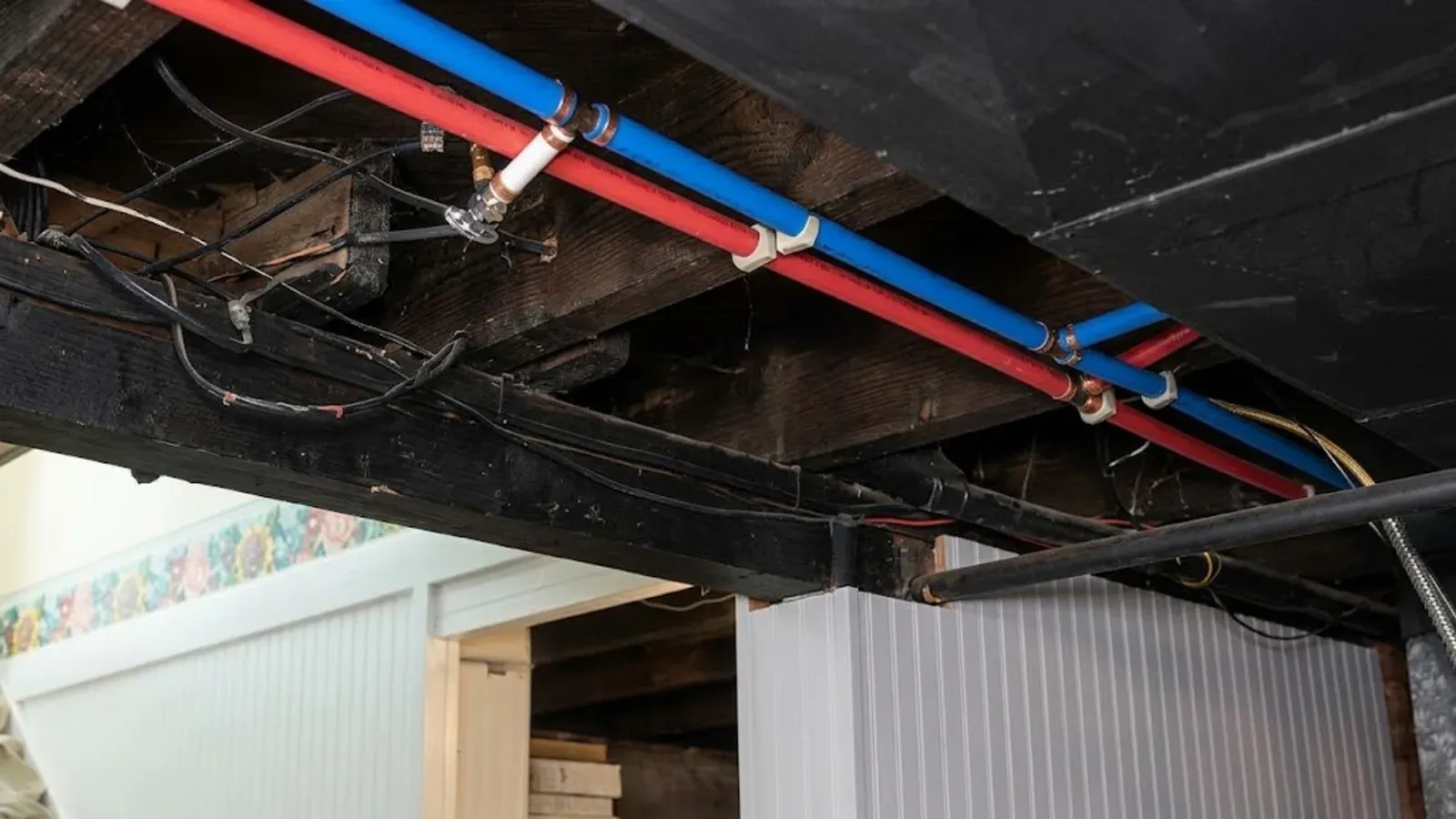
Pipe material is the first question. Galvanized steel was common in older homes and corrodes from the inside, shrinking the opening until pressure falls. Copper lasts for decades but can develop pinholes. PEX, a flexible plastic tube, is common in newer work and in repipes. CPVC and PVC appear in various places.
A plumber finds out by looking at exposed runs near the meter, water heater and under sinks. Tell the dispatcher what you can see and the age of the house, and the plumber will come ready for what is likely.
PEX or copper
| PEX | Copper | |
|---|---|---|
| Install speed | Fast, flexible tube fishes through walls | Slower, rigid, soldered joints |
| Wall damage | Often less, fewer cuts | Often more |
| Freeze tolerance | Handles freezing better than rigid pipe | Splits when frozen |
| Long track record | Newer, strong record | Many decades of use |
| Typical cost | Often lower | Often higher |
Both are accepted under the National Standard Plumbing Code that New Jersey adopts at N.J.A.C. 5:23-3.15. The plumber explains which fits your house, and the choice may follow how the walls are built and what you want to keep.
How a repipe works
A repipe is staged to keep water off as little as possible. The crew shuts off the water, maps the existing lines and plans new runs from the main to each fixture. New pipe goes in, usually through small openings in drywall, the attic, the basement or the crawlspace. Fixtures are reconnected, the system is pressure tested and the water comes back on.
Expect a few days of work for an average house. Drywall openings get patched, though painting is usually separate. Ask what is included in the price so you can plan drywall repair and paint.
Third pinhole leak this year? Ask whether repiping makes sense.
Call (732) 466-1098Repipe, spot repair or leak detection first
If you have one leak, you do not need a repipe. A burst pipe repair fixes it. If you have several leaks, finding them with leak detection shows whether the problem is a single run or the whole system. A plumber should explain the evidence, not push a big job.
Permits, licensing and inspection
New Jersey requires plumbing work to be performed by a licensed master plumber, and a repipe is a major job that generally involves a permit and an inspection. Ask the Middletown construction office at 1 Kings Highway, 732-615-2106, what applies. A repipe done without a permit can cause trouble at resale.
Why age and water chemistry matter
The 2023 report for New Jersey American Water's Coastal North system lists total hardness between 72 and 140 ppm, with chloramine used to treat surface water. Water chemistry interacts with pipe materials over decades, and your own water may differ at the tap. A plumber can look at the inside of a cut pipe to see scale and corrosion, which is more informative than a guess.
If you live in an older neighborhood like those near Middletown Village, you may see a mix of materials from repairs done at different times. A repipe replaces that patchwork with a single material and consistent connections.
Living in the house during the job
Most households stay in the house during a repipe. Plan for water shut off for part of each day and a few places where walls are open. Ask the crew about temporary water access, protect floors, and move furniture away from work areas.
Repiping and the rest of the plumbing
A repipe is a good time to check the drain side, and a sewer inspection shows whether the main line needs attention too. Older houses in Red Bank and Middletown can combine the two jobs.
What changes the price of repiping
We give a clear price before work starts.
Insurance note: repiping due to age is usually not covered, though damage from a sudden burst may be. Ask your insurer before work begins.
Questions we hear from Middletown homeowners
Most houses take a few days depending on size and access. The plumber confirms the schedule after seeing the layout.
Usually some small openings, and PEX often needs fewer than copper. The plumber explains where access holes go before work starts.
Most households stay. Water is off for part of each day, so plan for that.
Not by itself. Several leaks, rusty water or low pressure together are stronger signs. A plumber can review the pipes.
Yes. The 24/7 line handles burst pipes. See burst pipe repair.