
What to do before the installer arrives
Prepare the space
- Clear a path to the old heater and the area around it.
- Locate the main water shutoff and, for gas, the gas shutoff.
- Move stored items and anything that could be damaged by water.
- Have the model number of the old heater and any manuals ready.
- Plan for the water to be off for several hours.
Installation versus replacement
A like-for-like swap puts a new tank where the old one sat, using the same connections. An installation covers anything more: a new location, a fuel change, a tankless conversion, an upgrade in capacity, or a first heater in an addition. Those jobs need design before work starts.
If your tank has already failed and you need hot water today, water heater replacement is the faster path. Planning a project with time to spare is where installation shines, because the right choices cost less to make once.
Questions that decide the install
What the plumber will ask on the phone
- Is the existing heater gas or electric, and how old is it?
- Where does it sit: basement, closet, garage, attic or crawlspace?
- How many bathrooms and people use hot water at the same time?
- Is there a flue or chimney, and what is its condition?
- Do you want to keep the fuel, or are you thinking of switching?
- Is there a floor drain or a spot for a condensate line?
Fuel change: what has to move
Switching from gas to electric needs an electrical circuit of the right size, and the electrician side of that is separate from the plumbing work. Switching from electric to gas needs a gas line, a flue and combustion air. Going to a heat pump unit needs clearance, a drain and enough air volume in the room.
Fuel changes are common enough to plan carefully. The plumber coordinates gas and water, and tells you when you need an electrician or a permit review.
Venting and combustion air
A gas heater has to exhaust combustion gases safely. Older homes often share a flue with a furnace, and a flue that was sized for both appliances may be oversized for a new heater alone. The plumber checks draft and flue condition. Power-vent and direct-vent units move exhaust through a side wall with plastic pipe when a chimney is not an option.
Carbon monoxide detectors belong near any gas appliance. If yours are older than their rated life, replace them at the same time as the heater.
Moving the heater or changing fuel? Ask for a clear price first.
Call (732) 466-1098New Jersey code, permits and licensing
The state plumbing subcode adopts the National Standard Plumbing Code Illustrated/2021 under N.J.A.C. 5:23-3.15, and New Jersey requires plumbing to be done by a licensed master plumber. Permit rules vary by job, so ask the Middletown construction office at 1 Kings Highway, 732-615-2106, whether yours needs one.
Verify any plumber you hire through the State Board of Examiners of Master Plumbers at njconsumeraffairs.gov. A genuine plumber is happy to be checked.
Tank installs and the Middletown water supply
Middletown Township is listed among the communities served by New Jersey American Water's Coastal North system, which reports total hardness from 72 to 140 ppm in 2023. Moderate hardness means scale on heating elements, especially on tankless units and on electric tanks.
A shutoff valve and a drain valve you can reach, plus a note on your calendar for a yearly flush, protect the investment. A water softener or a scale-reducing filter is a separate decision and depends on what you see at your taps.
Expansion tanks, pressure and relief piping
Many homes have a check valve or a pressure reducing valve on the incoming water line. That turns the plumbing into a closed system, and heating water has nowhere to expand. An expansion tank gives it somewhere to go and keeps the relief valve from dripping.
Install steps include a relief valve discharge pipe that ends where code requires and where scalding water cannot hurt anyone. Cutting corners here is a safety risk, and it is a code item the inspector checks.
Common installation options at a glance
| Option | Install complexity | Typical timing |
|---|---|---|
| Same location, same fuel | Low | Often a single visit |
| Gas to electric tank | Medium, needs a circuit | Plumber plus electrician |
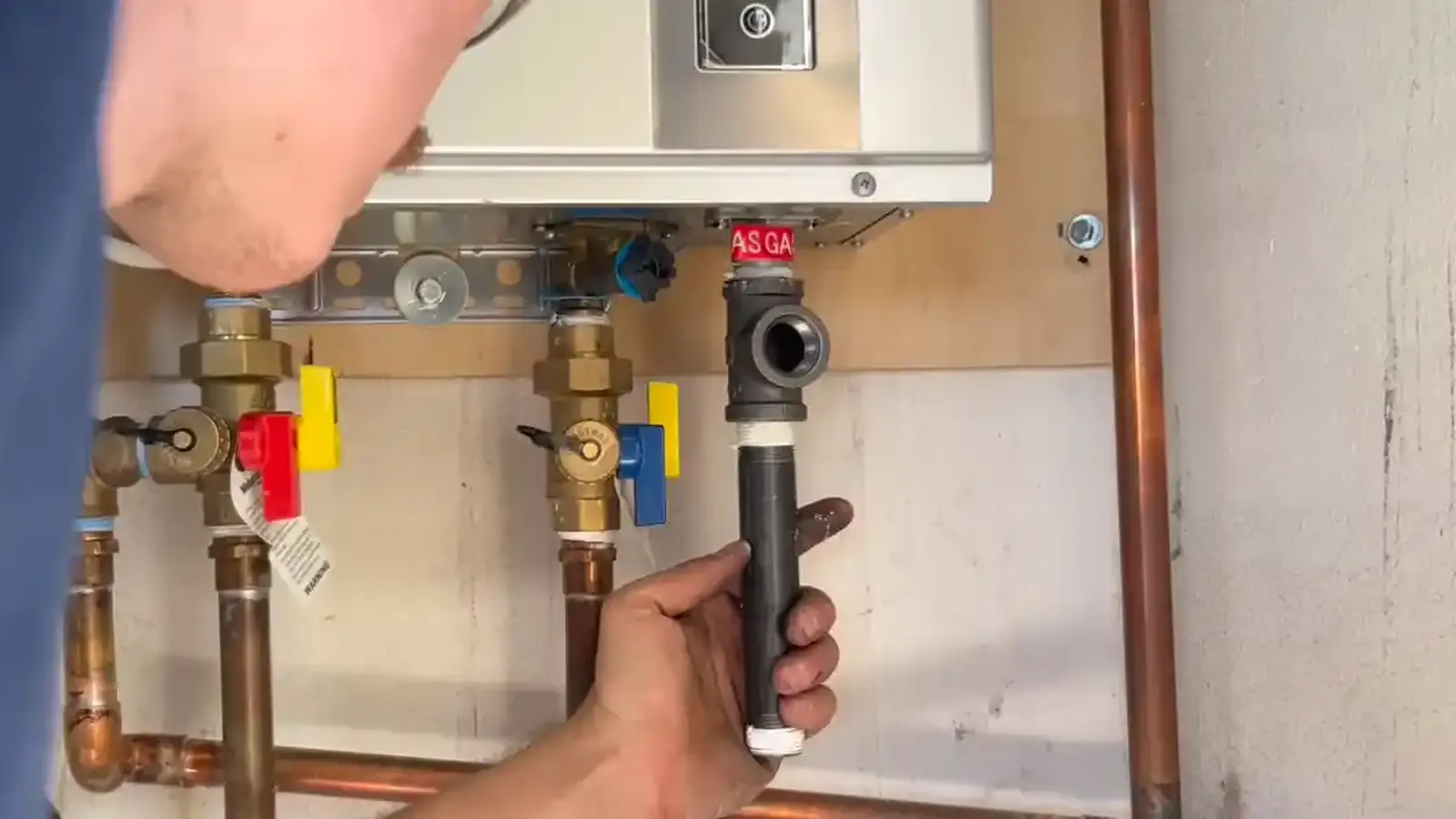
| Tank to tankless | Higher, venting and gas sizing | Planned day with prep |
| Tank to heat pump | Medium, needs space and drain | Planned visit |
If you land on a tankless unit, our tankless water heater page covers venting, scale and yearly service.
Install, replace or repair
If the old tank is still working, water heater repair may be enough, and a failed tank is a water heater replacement job. Choosing a tankless water heater changes the vent and gas plan, which matters in Red Bank homes with older utilities.
What changes the price of a water heater installation
We give a clear price before work starts.
Insurance note: keep the install paperwork. If a heater fails later, documented professional installation helps with warranty and claims.
Questions we hear from Middletown homeowners
A same-location tank install often takes a few hours. Moving a heater, changing fuel or installing tankless takes longer, and the plumber gives a plan on site.
Often yes, with new supply lines, a drain and the right venting or circuit. The plumber reviews the new location first.
Usually yes for a new circuit. The plumber coordinates the water side and tells you what the electrical side requires.
It depends on household size, fuel and budget. Tankless gives continuous hot water and saves space, but costs more to install and needs annual descaling.
The dispatch line is open 24/7. Planned installs are scheduled for same-day or next available appointments.