
If the pump has failed right now
Do not put your hands into the pit while the pump is plugged in. Unplug it first. If water is above the outlets, do not enter the room.
How a sump pump works
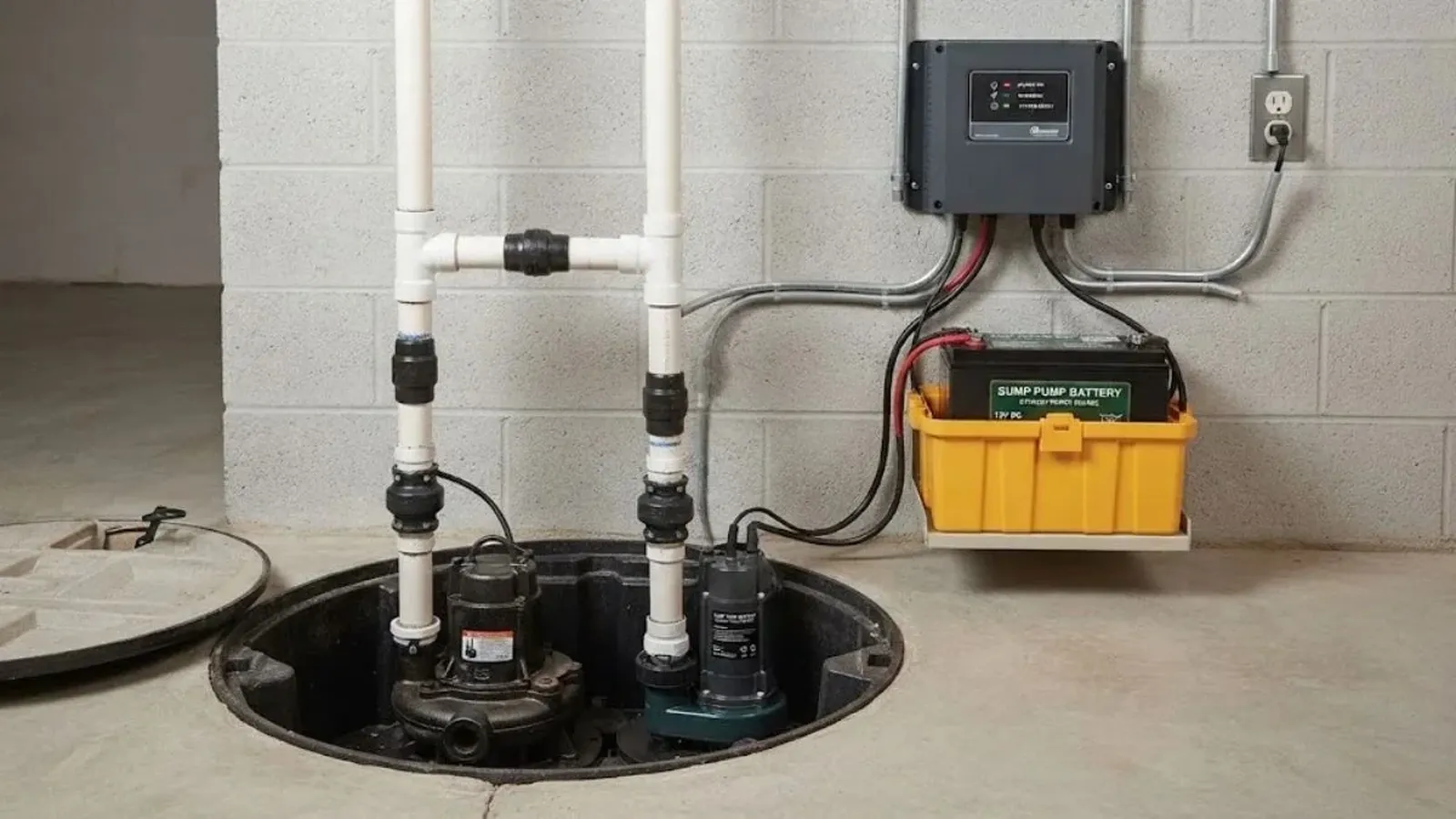
A sump pit collects groundwater from drain tile around the foundation. A float switch rises with the water and starts the pump, which pushes water out through a discharge pipe to the yard or a storm line. A check valve in the pipe stops water from flowing back into the pit.
The system is simple and has simple failures. A stuck float, a burned motor, a failed check valve or a blocked discharge are the usual ones. A pump that runs for years without testing may fail the first night it is needed.
Troubleshooting by symptom
| Symptom | Likely cause | Typical fix |
|---|---|---|
| Pump does not start | Power, stuck float or dead motor | Reset, free float, replace pump |
| Runs constantly | Stuck float, failed check valve or very high water | Reposition float, replace check valve |
| Cycles on and off quickly | Check valve backflow, small pit | Replace check valve, adjust pit |
| Loud noise or rattling | Worn bearings or debris | Clean or replace pump |
| Runs but pit does not empty | Blocked discharge or air lock | Clear discharge, drill relief hole |
| Water smell or rust | Stagnant water or mineral buildup | Clean pit, replace pump |
Pump not running and rain still falling? Call now.
Call (732) 466-1098Battery backup and water-powered backup
Most pumps are electric, and storms often knock out power exactly when a pump is needed. A battery backup pump takes over when the main pump or the power fails. Water-powered backups use municipal water pressure and need no electricity, but they need a certain pressure and use a lot of water.
Choose a backup based on the length of local outages and the risk of flooding. A plumber can size the battery and explain how long it can run. Test the backup at least twice a year.
Test your pump before storm season
Pour a bucket of water into the pit and watch the pump start, empty the pit and shut off. Listen for odd noises. Check the discharge outside to see that water flows away from the house and does not return. Clear leaves and ice from the discharge.
Do this each spring and fall. If the pump is more than about seven to ten years old, consider replacing it before it fails. A pump that has run for years is closer to the end of its life than it looks.
Where the water goes
Discharge should empty well away from the foundation, onto ground that slopes away. Local rules may limit where you can discharge sump water. Do not connect a sump pump to the sanitary sewer, since it overloads sewer systems and can be prohibited. Ask the Middletown construction office at 1 Kings Highway or the sewerage authority what applies.
Why Middletown basements get wet
Middletown Township borders the Raritan Bay and Navesink River areas. Neighborhoods like Port Monmouth, Belford and Leonardo sit close to the water table and were flooded in Sandy in October 2012. High groundwater, coastal storms and heavy rain can push water into basements and crawlspaces.
A sump pump handles groundwater. It does not stop flood surge from a storm, and it cannot keep up when the storm drain system overflows. If your property floods repeatedly, a plumber can talk through grading, drain tile and backwater valves. See basement waterproofing for related options.
Pumps, drains and the water that gets past them
If water still reaches the floor with a working pump, the answer may be basement waterproofing drainage, and a failed pump during a storm is also a case for leak detection when the source is unclear. Low-lying streets near the river in Red Bank can ask about this.
What changes the price of sump pump work
We give a clear price before work starts.
Insurance note: many standard policies exclude groundwater and sump pump failure unless you add a water backup endorsement. Ask your agent before the next storm.
Questions we hear from Middletown homeowners
Yes. Call (732) 466-1098 at any hour. If water is near outlets, stay out of the room and tell the dispatcher.
Many last seven to ten years, depending on use. Pumps that run often wear out sooner.
A stuck float, a failed check valve or very high groundwater are the usual reasons. A plumber can check each.
If your basement floods when the power is out, a backup is worth considering. A plumber can size one.
No. It handles groundwater but not storm surge or sewer backup. See basement waterproofing.